You walk into a room and the walls are moving. Snow falls on one side, a logo spins across the other, and the whole space shifts colors with the beat. It is not a screen and it is not paint. It is projection mapping.
Here is what it is, how it works, and why it changes how an event feels, explained without the tech talk.
What Is Projection Mapping?
Projection mapping is using projectors to cover real surfaces like walls, ceilings, or entire buildings with video that is shaped to fit them exactly. Instead of throwing a picture onto a flat white screen, the video is fitted to every edge and corner of the space, so the image looks like it belongs to the room itself.
You have probably seen it before without knowing the name. Light shows on castles at theme parks, buildings that seem to crumble or come alive during festivals, art exhibits where the walls move around you. All of that is projection mapping.
How It Works, in Plain English
- Projectors are aimed at the walls. Each one covers its own section of the room.
- A map tells each projector where to paint. Software traces the room, every wall, edge, and corner, so each projector knows exactly where its picture should land and where it should stop.
- Video plays through that map. The projectors blend together, and the whole room becomes one giant canvas.
That is really it. The hard part is the map. Once a room is mapped correctly, anything from a slow snowfall to a full concert light show can play across it.

How It Works at Diamondback
Diamondback Music Hall runs more than 16 projectors around the room. They wrap the walls above the exits and behind the speakers, and the LED wall behind the stage plays along with them. Because the room is already mapped, one video can stretch around the entire space and look like it was made for it.
Pair that with concert lighting, lasers, and a full sound system, and the room can go from a winter lodge to a vampire nightclub to a brand launch without hanging a single decoration.
Why It Feels Different Than a Screen
A screen is something you look at. Projection mapping is something you stand inside. When the walls change, the whole room changes with them, and every guest feels it at the same time.
- It transforms the room. One space can feel completely different from one night to the next, or from one song to the next.
- It replaces a lot of decor. Themes, colors, and scenery come from light, so there is less to build, rent, and tear down.
- It puts your brand everywhere. A logo on the walls is seen by every guest and shows up in every photo.
- People film it. Guests pull out their phones when the walls move, which turns your event into free social content.
What It Looks Like at Different Events
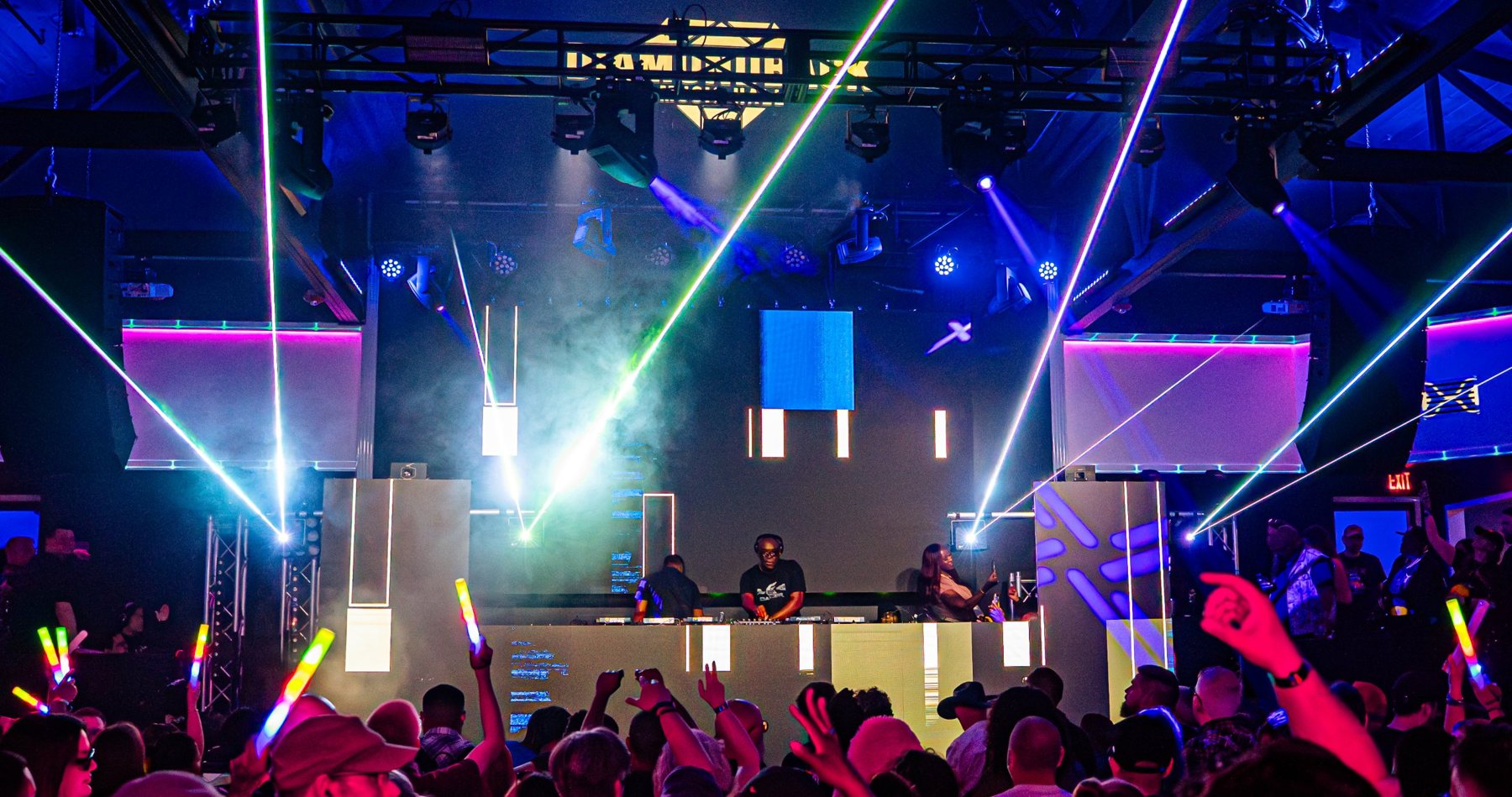
- Concerts and DJ nights: visuals that move with the music and wrap the crowd in color.
- Holiday parties: snowfall, twinkling lights, and your company logo across the room.
- Brand launches: product video and logos on every wall, so the room becomes part of the campaign.
- Weddings: your names or monogram, soft color washes, and a different look for dinner and the dance floor.
- Birthdays and private parties: a name, photos, or a theme that fills the space the moment guests walk in.
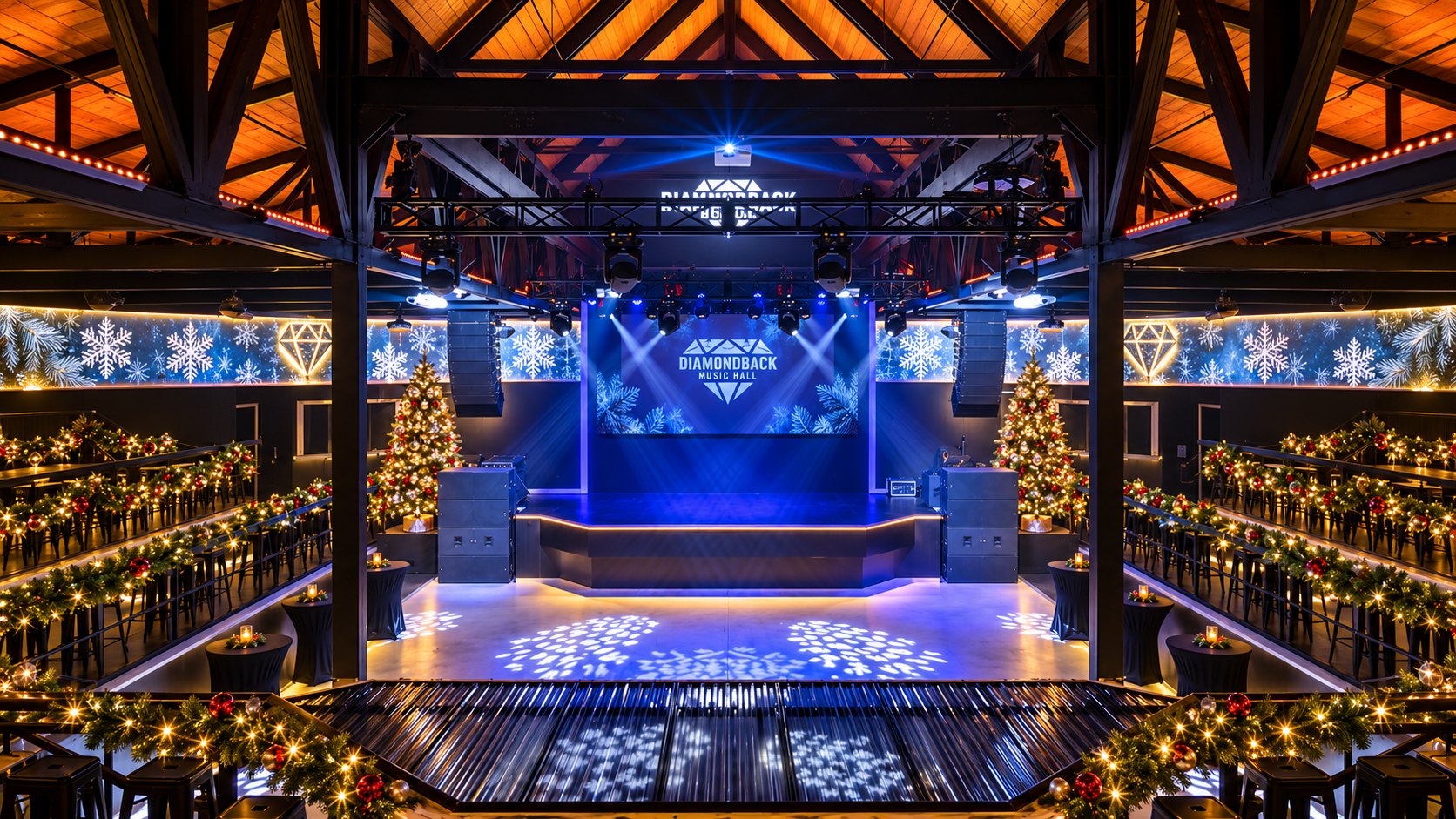
Included With Every Private Event
At a lot of venues, a show like this is an expensive add-on. At Diamondback, projection mapping is included with every private rental.
Using it is simple. Send us a regular HD video, your logo, or a few photos, and our team fits it to the room and tests it on the system before your guests arrive. You can send more than one video and switch looks throughout the night. If you want something fully custom built for every surface, our design team can create it with you.
See what else comes with a rental in Holiday Parties at Diamondback Music Hall, or come see the room in person.
Projection Mapping: Quick Answers
Projection mapping uses projectors to cover real surfaces, like walls or buildings, with video fitted to their exact shape, so the surface itself appears to move and change.
No. A projector and screen shows one flat picture in one spot. Projection mapping uses many projectors and a map of the space to cover entire walls, around corners and objects, so the whole room becomes the display.
Diamondback Music Hall in Belleville, Michigan uses more than 16 projectors to map its main room for concerts, themed nights, and private events. It is right off I-94, about 25 minutes from downtown Detroit.
Yes. Projection mapping is included with every private rental at Diamondback Music Hall.
No. You can send a standard HD video, a logo, or photos, and the Diamondback team will fit it to the room. Fully custom content can also be designed for you.
Coming Up at Diamondback